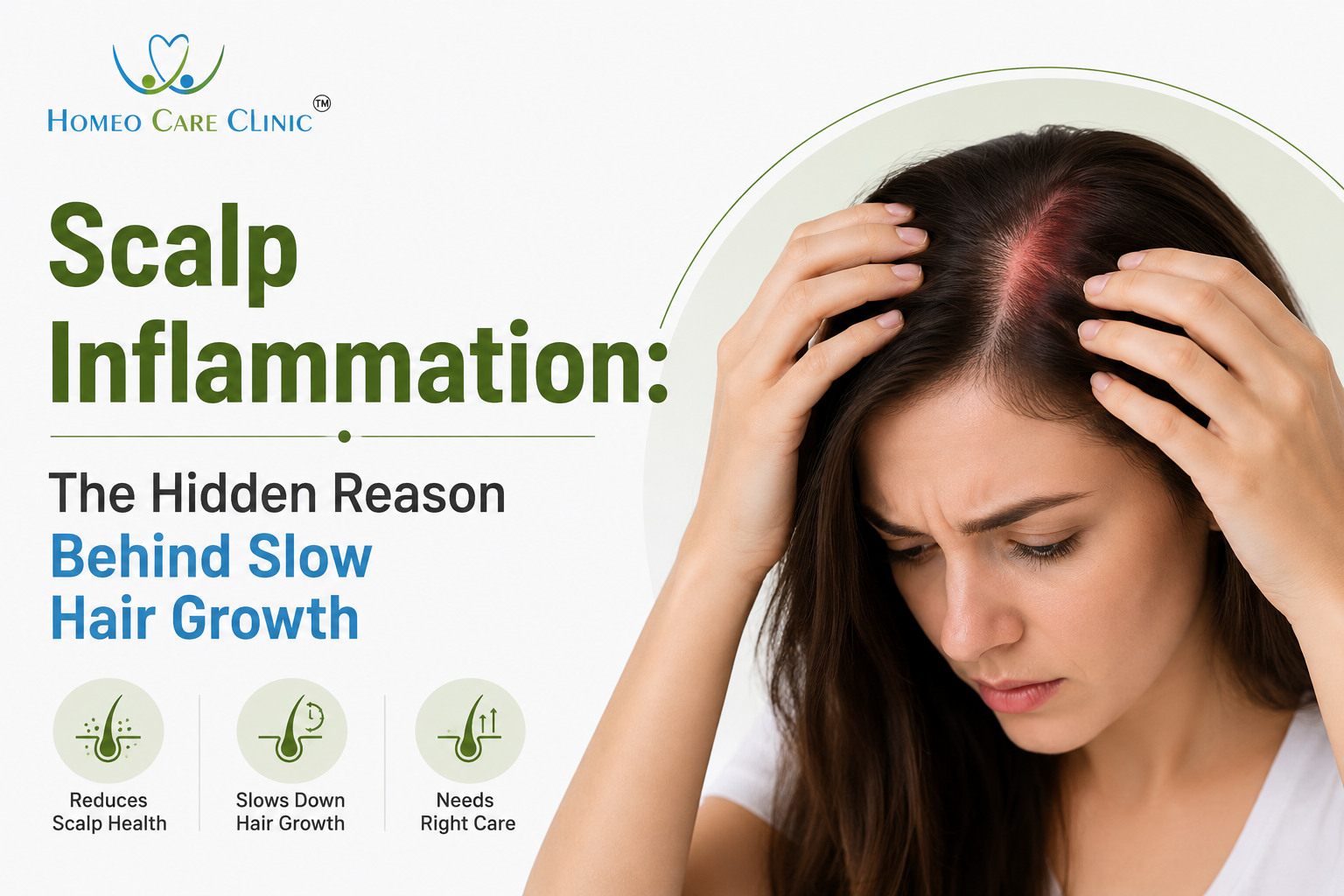
Scalp Inflammation: The Hidden Reason Behind Slow Hair Growth
Introduction
Have you been investing in hair oils, serums, supplements, and expensive shampoos but still noticing slow hair growth? The problem may not be your hair—it could be your scalp.
A healthy scalp is the foundation of healthy hair. When the scalp becomes inflamed, irritated, or infected, it creates an unhealthy environment for hair follicles, making it difficult for them to produce strong, healthy hair. Over time, this can lead to slow hair growth, hair thinning, and even temporary hair loss.
In this guide, we’ll explain what scalp inflammation is, why it affects hair growth, its symptoms, causes, treatment options, and practical tips to restore a healthier scalp.
What Is Scalp Inflammation?
Scalp inflammation refers to irritation or swelling of the scalp caused by immune responses, infections, skin conditions, or environmental factors. When inflammation occurs, the normal hair growth cycle can be disrupted, and hair follicles may not function optimally.
Although inflammation doesn’t always lead to permanent hair loss, persistent or untreated inflammation can weaken hair follicles, resulting in slower hair growth and reduced hair density.
Why Does Scalp Inflammation Affect Hair Growth?
Hair follicles rely on a healthy scalp to receive oxygen and nutrients. Inflammation can:
- Damage or irritate hair follicles
- Disrupt the natural hair growth cycle
- Reduce blood circulation to the scalp
- Cause excessive shedding
- Slow the production of new hair strands
- Increase the risk of hair thinning
Early treatment is important to prevent long-term scalp damage.
Common Causes of Scalp Inflammation
1. Dandruff and Seborrheic Dermatitis
One of the most common causes of scalp inflammation is dandruff or seborrheic dermatitis. Symptoms include flaking, redness, itching, and irritation.
2. Psoriasis
Scalp psoriasis is an autoimmune condition that causes thick, scaly patches and persistent inflammation.
3. Folliculitis
Folliculitis occurs when hair follicles become inflamed due to bacterial or fungal infections, often causing painful bumps or pimples.
4. Allergic Reactions
Certain hair dyes, shampoos, conditioners, or styling products may trigger allergic contact dermatitis, leading to scalp irritation.
5. Fungal Infections
Scalp fungal infections, such as ringworm (tinea capitis), can cause inflammation, itching, scaling, and patchy hair loss.
6. Excessive Heat and Chemical Treatments
Frequent hair coloring, bleaching, straightening, or heat styling can damage the scalp barrier and contribute to chronic irritation.
7. Poor Scalp Hygiene
Oil buildup, sweat, pollution, and product residue can create an unhealthy environment for the scalp, increasing the risk of inflammation.
8. Stress
Chronic stress may worsen inflammatory skin conditions and disrupt the hair growth cycle.
Symptoms of Scalp Inflammation
Signs of scalp inflammation may include:
- Persistent itching
- Redness
- Burning sensation
- Tenderness
- Flaky scalp
- White or yellow scales
- Pain when touching the scalp
- Small bumps or pimples
- Excessive dandruff
- Hair thinning
- Slow hair growth
- Increased hair shedding
Can Scalp Inflammation Cause Hair Loss?
Yes. While scalp inflammation itself does not always cause permanent hair loss, prolonged inflammation can weaken hair follicles and contribute to:
- Diffuse hair thinning
- Reduced hair density
- Temporary hair shedding (telogen effluvium)
- Patchy hair loss in certain conditions
- Slower hair regrowth
If inflammation is treated early, hair growth often improves.
How Is Scalp Inflammation Diagnosed?
A dermatologist may evaluate your condition through:
- Medical history
- Physical examination of the scalp
- Dermoscopy (trichoscopy)
- Fungal or bacterial tests (if infection is suspected)
- Skin biopsy (in rare cases)
- Allergy testing when contact dermatitis is suspected
Accurate diagnosis helps determine the most effective treatment.
Treatment for Scalp Inflammation
Treatment depends on the underlying cause.
Medicated Shampoos
A healthcare provider may recommend shampoos containing ingredients such as:
- Ketoconazole
- Zinc pyrithione
- Selenium sulfide
- Coal tar
- Salicylic acid
Use these only as directed by your healthcare provider.
Topical Medications
Depending on the diagnosis, treatment may include:
- Anti-inflammatory creams or lotions
- Topical corticosteroids
- Antifungal medications
- Antibiotics (for bacterial infections)
Oral Medications
For severe or persistent conditions, a doctor may prescribe oral medications to control inflammation or treat infections.
Scalp Care Routine
Maintaining a healthy scalp can support hair growth:
- Wash regularly with a suitable shampoo.
- Avoid harsh chemicals.
- Massage the scalp gently.
- Keep styling products to a minimum.
- Protect the scalp from excessive sun exposure.
Hair Growth Tips for a Healthy Scalp
A healthy scalp supports stronger hair growth. Consider these habits:
Eat a Nutrient-Rich Diet
Include foods rich in:
- Protein
- Iron
- Zinc
- Vitamin D
- Omega-3 fatty acids
- Fruits and vegetables
Manage Stress
Stress reduction techniques such as meditation, yoga, or regular exercise may help improve overall scalp health.
Stay Hydrated
Adequate hydration supports skin and scalp function.
Avoid Excessive Heat Styling
Limit the use of hair dryers, straighteners, and curling irons to reduce scalp irritation.
Choose Gentle Hair Care Products
Use products suitable for your scalp type and avoid those that cause irritation.
Can Scalp Inflammation Be Cured?
Whether scalp inflammation can be completely cured depends on its cause.
- Temporary conditions, such as infections or allergic reactions, often resolve with appropriate treatment.
- Chronic conditions, such as psoriasis or eczema, may not have a permanent cure but can usually be managed effectively with ongoing care.
The goal of treatment is to control inflammation, relieve symptoms, and create a healthy environment for hair growth.
When Should You See a Dermatologist?
Seek medical advice if you experience:
- Persistent itching or redness
- Severe dandruff
- Painful scalp
- Visible hair thinning
- Pus-filled bumps
- Scalp sores
- Hair loss lasting more than a few weeks
- Symptoms that do not improve with over-the-counter products
Early treatment can help protect hair follicles and improve outcomes.
Tips to Prevent Scalp Inflammation
- Wash your scalp regularly.
- Avoid sharing combs or brushes.
- Limit harsh chemical treatments.
- Use mild shampoos.
- Protect your scalp from excessive sun exposure.
- Eat a balanced diet.
- Treat dandruff promptly.
- Manage stress effectively.
- Avoid scratching the scalp excessively.
Frequently Asked Questions (FAQs)
1. Can scalp inflammation slow hair growth?
Yes. Persistent inflammation can disrupt the hair growth cycle and reduce the ability of hair follicles to produce healthy hair.
2. What causes scalp inflammation?
Common causes include dandruff, seborrheic dermatitis, psoriasis, eczema, fungal infections, folliculitis, allergies, and excessive use of harsh hair products.
3. Is scalp inflammation permanent?
Not usually. Many causes are treatable, while chronic conditions can often be managed effectively with long-term care.
4. Does dandruff cause hair loss?
Dandruff itself does not directly cause permanent hair loss, but severe inflammation and scratching may contribute to temporary shedding.
5. How can I improve scalp health naturally?
Maintain good scalp hygiene, eat a balanced diet, manage stress, stay hydrated, avoid harsh chemicals, and use gentle hair care products.
6. Which doctor treats scalp inflammation?
A dermatologist or trichologist can diagnose and treat scalp conditions affecting hair growth.
7. Can scalp inflammation damage hair follicles?
If left untreated for a prolonged period, chronic inflammation may weaken or damage hair follicles, affecting hair growth.
8. When should I seek medical attention?
If symptoms are severe, persistent, associated with significant hair loss, or accompanied by pain, sores, or infection, consult a dermatologist promptly.
Conclusion
Healthy hair starts with a healthy scalp. Scalp inflammation is a common but often overlooked factor that can slow hair growth and contribute to hair thinning. Whether the cause is dandruff, psoriasis, an infection, or irritation from hair products, identifying and treating the underlying problem is key to restoring scalp health.
With proper diagnosis, evidence-based treatment, and a consistent scalp care routine, many people can reduce inflammation, improve hair growth, and maintain stronger, healthier hair. If your symptoms persist or worsen, seek advice from a qualified dermatologist for a personalized treatment plan.