Hair growth is a gradual biological process, and one of the biggest mistakes people make during hair-loss treatment is expecting visible results too quickly. Whether you are considering PRP treatment for hair loss, managing thinning hair, or following a doctor-recommended hair-care plan, understanding the hair growth cycle can help you set realistic expectations.
At Hair PRP Treatment Pune, we believe that understanding how your hair follicles work is an important part of making informed treatment decisions. PRP therapy is not an overnight solution. Hair follicles need time to respond, move through their natural growth cycle, and produce visible changes.
In this guide, we explain the hair growth cycle, why patience matters during hair treatment, what you may notice during the process, and how consistency can support your hair restoration journey.
What Is the Hair Growth Cycle?
Every hair follicle on your scalp follows a natural cycle. However, all follicles are not in the same stage at the same time. While some hairs are actively growing, others may be transitioning or resting.
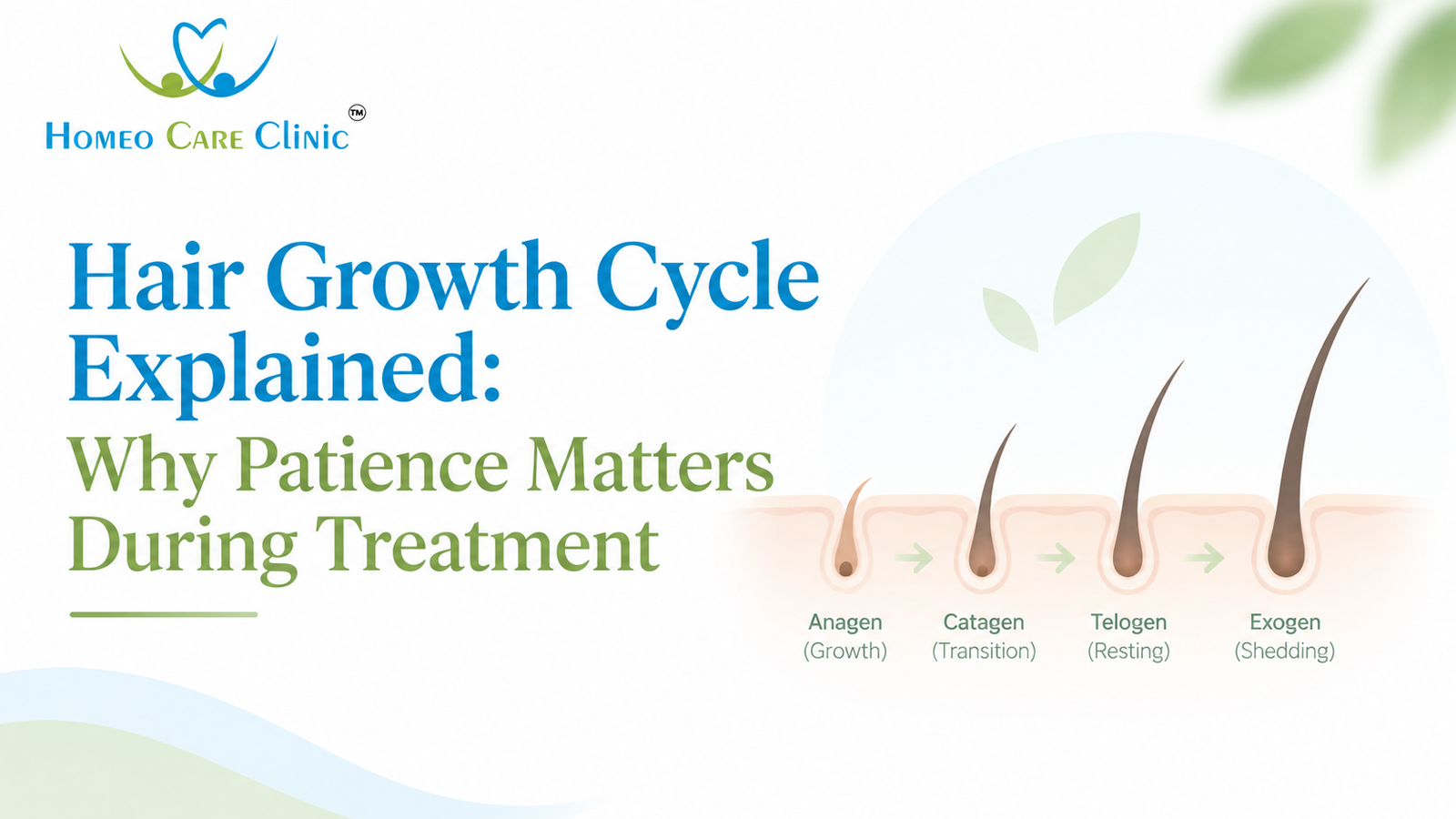
The three primary phases of the hair growth cycle are:
- Anagen – Active Growth Phase
- Catagen – Transition Phase
- Telogen – Resting and Shedding Phase
Understanding these stages helps explain why hair growth cannot be judged from day-to-day changes.
1. Anagen Phase – The Active Growth Stage
The anagen phase is the period when the hair follicle is actively producing a hair shaft.
This phase can last for several years, although its duration varies between individuals and depends on factors such as genetics, age, overall health and other biological influences.
During anagen:
- Hair cells actively produce new hair.
- The hair shaft continues to grow.
- The follicle remains connected to its supporting structures.
- Healthy scalp conditions are important for normal hair growth.
Because hair grows gradually, even when a follicle is functioning normally, visible improvement takes time.
2. Catagen Phase – The Transition Stage
After active growth, the follicle enters the catagen phase.
This is a relatively short transitional stage, generally lasting around a few weeks. Hair growth slows or stops, and the follicle undergoes structural changes before entering the resting phase.
During this period, the follicle is preparing for the next part of its cycle.
3. Telogen Phase – Resting and Shedding Stage
The telogen phase is the resting stage of the hair cycle. It generally lasts for several months.
At the end of this stage, the old hair may naturally shed as the follicle prepares to produce a new hair.
Some amount of daily hair shedding is normal. However, excessive, persistent or sudden hair loss can have many possible causes and should be evaluated rather than automatically attributed to the normal hair cycle.
The important point is that shedding does not necessarily mean that the hair-growth process has stopped.
Why Does Hair Growth Take So Long?
Hair follicles operate according to their biological cycle, not according to our preferred timeline.
This is why applying a treatment today and expecting significantly thicker hair within a few days is unrealistic.
The hair you see today may have started developing months earlier. Similarly, improvements associated with a treatment may become visible gradually rather than immediately.
This is one reason consistency and patience are important when managing hair thinning or hair loss.
How Does the Hair Growth Cycle Relate to PRP Treatment?
Platelet-rich plasma (PRP) therapy is a procedure in which a patient’s own blood is processed to concentrate platelets and then administered into targeted areas of the scalp.
PRP is used by some clinicians as a treatment option for certain types of hair loss, particularly androgenetic alopecia. Its suitability depends on the individual’s diagnosis, stage of hair loss, follicle condition and overall health.
The important thing to understand is that PRP does not instantly create new visible hair.
Instead, treatment is intended to support the scalp and hair follicles, and any response needs to occur within the natural hair-growth cycle.
Therefore, the results of PRP hair treatment should be evaluated over time rather than after a few days.
Why Patience Matters During Hair PRP Treatment
1. Hair follicles need time to respond
Hair follicles are living structures that follow a biological cycle. Treatment cannot force every follicle to produce visible hair immediately.
A gradual response is therefore more realistic than an overnight transformation.
2. Visible hair growth takes time
Even when a follicle is responding, newly produced hair may initially be fine or difficult to notice.
With time, changes in hair length, thickness and overall coverage may become easier to observe.
3. Everyone’s hair-loss journey is different
There is no single PRP timeline that applies to everyone.
Your response may depend on:
- The underlying cause of hair loss
- Duration of hair loss
- Extent of thinning
- Age and genetics
- Follicle condition
- General health and nutrition
- Other treatments being used
- Individual response to PRP
This is why an individual assessment is important before deciding whether PRP is appropriate.
A General Timeline: What Can You Expect?
It is important not to treat a timeline as a guarantee. Hair growth and treatment response vary from person to person.
A general way to think about the process is:
| Stage | What You May Notice |
| Early stage | Scalp may be settling after treatment; visible hair changes may be minimal |
| First few months | Changes may still be subtle; consistency and follow-up are important |
| Following months | Some individuals may begin noticing changes in hair density or quality |
| Longer term | Treatment response can be assessed more meaningfully with clinical follow-up and comparison photos |
For PRP, your doctor may recommend a series of sessions depending on your condition and treatment plan. The number and spacing of sessions should be determined individually rather than following a fixed schedule advertised as suitable for everyone.
Does More Hair Shedding Mean Treatment Is Not Working?
Not necessarily.
Hair naturally moves through growth, transition and resting stages. Temporary changes in shedding can occur for different reasons.
However, significant or persistent hair loss should not simply be ignored or assumed to be part of treatment.
If you notice a sudden increase in hair loss, scalp inflammation, patches of hair loss or other unusual symptoms, consult a qualified medical professional for an appropriate evaluation.
Why Consistency Is More Important Than Speed
One of the most useful lessons from the hair-growth cycle is that consistency is generally more helpful than constantly changing treatments.
Jumping from one treatment to another because you do not see immediate results can make it difficult to determine what is actually helping.
A consistent approach may include:
- Following your clinician’s recommended treatment schedule
- Attending scheduled follow-ups
- Following post-treatment scalp-care instructions
- Maintaining a balanced diet
- Managing avoidable hair and scalp damage
- Taking periodic photographs to compare progress
- Discussing concerns with your doctor rather than stopping treatment prematurely
Competitor educational resources similarly emphasise consistency, realistic expectations and monitoring progress rather than expecting rapid changes.
How to Track Hair Growth Progress Properly
Looking at your hair in the mirror every day is not always the best way to judge gradual improvement.
Instead, consider taking progress photographs.
Follow these simple tips:
Take photographs at regular intervals
Monthly comparisons can be more useful than checking every day.
Use the same lighting
Different lighting can make your hair appear thicker or thinner.
Use similar angles
Take photographs from the front, top, crown and both sides.
Keep your hairstyle similar
A different parting or hairstyle can create the appearance of increased or decreased density.
Keep a treatment record
Note your treatment dates, changes you notice and any questions you want to discuss during your follow-up.
Consistent photographs can help both patients and clinicians evaluate changes more objectively.
Factors That Can Affect Hair Growth
Hair growth is influenced by more than just a cosmetic treatment.
Some factors that may affect hair health include:
Genetics
Genetic factors can play an important role in conditions such as androgenetic alopecia.
Nutrition
Adequate nutrition is important for normal hair production. Deficiencies should be evaluated appropriately rather than assuming that supplements are necessary for everyone.
Hormonal Factors
Hormonal changes can contribute to hair shedding or thinning in some individuals.
Stress
Significant physical or psychological stress can affect the hair cycle and may contribute to increased shedding in certain situations.
Scalp Health
Conditions affecting the scalp can influence hair quality and should be addressed when present.
Hair-Care Practices
Repeated chemical treatments, excessive heat, tight hairstyles and rough handling may contribute to hair damage or breakage.
Because hair loss has many possible causes, identifying the underlying problem is an important part of choosing an appropriate treatment.
PRP Treatment Is Not the Same for Everyone
PRP is often discussed as a single treatment, but the ideal approach can vary depending on the individual.
Before starting PRP, a clinician may consider:
- Your pattern and duration of hair loss
- Scalp and follicle condition
- Medical history
- Current medications
- Previous hair-loss treatments
- Possible underlying causes of hair loss
- Whether PRP is an appropriate option for you
A personalised assessment helps set realistic expectations and determine the most suitable treatment strategy.
Common Mistakes People Make During Hair Treatment
Expecting results in a few days
Hair follicles need time to move through their natural cycle.
Changing treatments too quickly
Switching between treatments without professional guidance can make progress difficult to evaluate.
Comparing your results with someone else’s
Two people can have completely different causes and patterns of hair loss.
Checking the mirror every day
Small changes are difficult to recognise from day to day.
Ignoring the underlying cause
Hair loss can be associated with genetics, hormonal changes, nutritional issues, medical conditions and other factors. Treating the appearance without understanding the cause may not address the actual problem.
Hair Growth Is a Journey, Not an Overnight Result
The biggest takeaway is simple: hair growth takes time because hair follicles work in cycles.
The anagen, catagen and telogen phases naturally determine when individual hairs grow, transition and shed.
If you are considering PRP for hair loss, patience should be part of your treatment expectations from the beginning.
Rather than asking, “Why don’t I see results yet?” after a short period, focus on the bigger picture:
Is my treatment plan appropriate?
Am I following the recommended schedule?
Am I tracking my progress consistently?
Am I giving my hair follicles enough time to respond?
These questions can help you approach hair treatment more realistically.
Frequently Asked Questions About Hair Growth and PRP
How long does the hair growth cycle take?
The duration varies between individuals. The active growth phase can last for years, while the transition phase generally lasts a few weeks and the resting phase lasts several months.
How long does PRP take to show hair growth results?
PRP results are gradual and vary between individuals. Visible changes should not be expected immediately. Your clinician can provide a more appropriate timeline based on your diagnosis, treatment plan and response.
Is PRP effective for every type of hair loss?
No. PRP may be appropriate for some types of hair loss but is not a universal solution. The cause and stage of hair loss should be evaluated before treatment.
Can I expect thicker hair immediately after PRP?
No. PRP does not provide instant hair growth. Any improvement needs to occur within the natural hair-growth process.
How can I track my PRP hair treatment progress?
Take photographs from consistent angles and under similar lighting at regular intervals. Your clinician can also assess your progress during follow-up appointments.
Should I stop treatment if I don’t see quick results?
Do not make treatment changes solely based on short-term expectations. Discuss your concerns with your treating doctor, who can assess your progress and determine whether your treatment plan needs adjustment.
Is hair shedding always a sign of a problem?
No. Some daily shedding is part of the normal hair cycle. However, sudden, excessive or persistent shedding should be professionally evaluated.
Take the Next Step Towards Better Hair Health
If you are experiencing hair thinning or hair loss and are considering PRP treatment in Pune, a proper consultation can help you understand the possible cause of your hair loss and whether PRP may be suitable for you.
At Hair PRP Treatment Pune, the focus should be on an individualised approach rather than promising instant results.
Healthy hair takes time. The right diagnosis, appropriate treatment and consistent follow-up can help you make better decisions about your hair-restoration journey.
Book a consultation to discuss your hair-loss concerns and explore whether PRP treatment may be suitable for you.
Medical Disclaimer
This article is intended for general educational purposes and should not be considered a substitute for medical diagnosis or treatment. Hair loss can have different causes, and treatment suitability varies between individuals. Consult a qualified healthcare professional for personalised medical advice.