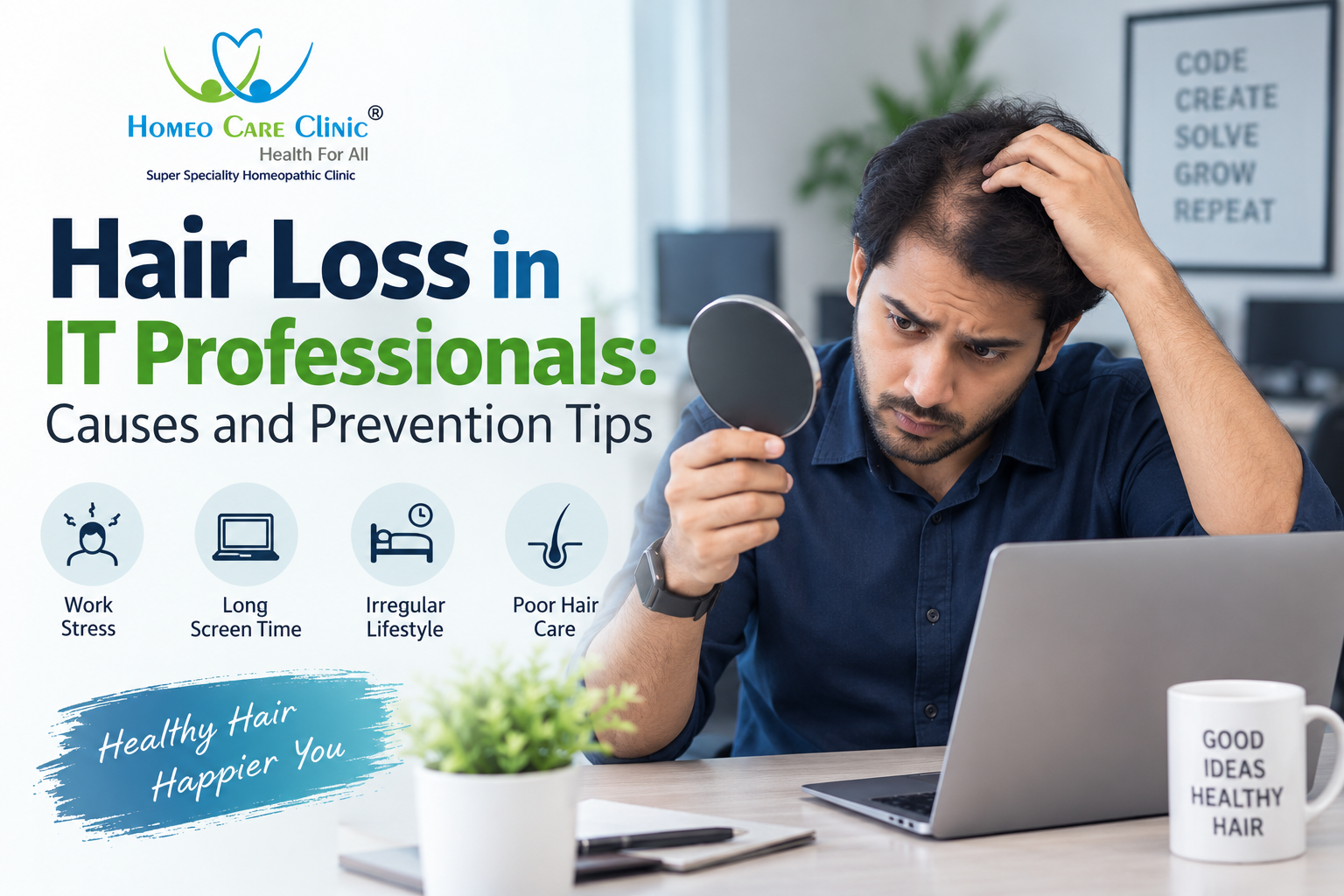
Hair Loss in IT Professionals: Causes and Prevention Tips
Long working hours, tight deadlines, high-pressure projects and irregular daily routines can make maintaining healthy hair more challenging. For many IT professionals, increased hair shedding or gradual thinning may become a concern.
While work-related stress can contribute to hair shedding, hair loss is not caused by one factor alone. Genetics, nutritional deficiencies, medical conditions, hormonal changes, medications, stress and hair-care practices can all play a role.
At Homeo Care Clinic, we focus on understanding the individual factors associated with your hair and scalp concerns and helping you take informed steps toward better hair and scalp care.
Why Is Hair Loss Common Among IT Professionals?
The IT industry often involves long hours at a computer, demanding deadlines, irregular schedules and periods of intense mental workload.
These lifestyle factors may indirectly contribute to hair concerns, particularly when they are associated with chronic stress, inadequate sleep, poor dietary habits or neglect of regular self-care.
However, it’s important to understand that simply working on a computer or spending time in front of a screen has not been established as a direct cause of hair loss.
Some common factors associated with hair loss in working professionals include:
- Work-related stress
- Irregular sleep patterns
- Poor or restrictive diets
- Nutritional deficiencies
- Rapid weight loss
- Genetic predisposition
- Hormonal or medical conditions
- Excessive heat or chemical hair treatments
- Tight hairstyles
- Certain medications
Stress can cause some hair follicles to enter a resting phase, resulting in increased shedding that may become noticeable later. This type of temporary shedding is commonly known as telogen effluvium.
Common Causes of Hair Loss in IT Professionals
1. Work-Related Stress
Deadlines, long working hours, demanding projects and workplace pressure can contribute to significant stress.
High physical or emotional stress can trigger increased hair shedding in some people. Stress-related shedding may occur weeks or months after the triggering event rather than immediately.
SEO keyword: stress and hair loss
What can help?
- Take regular breaks during long work sessions
- Include physical activity in your routine
- Practice relaxation or mindfulness techniques
- Maintain consistent sleep habits
- Seek professional help if stress becomes difficult to manage
2. Lack of Sleep
Late-night deployments, night shifts, deadlines and irregular working hours can disrupt sleep routines.
Poor sleep may form part of an overall pattern of physical stress and unhealthy lifestyle habits that can affect general wellbeing and potentially contribute to hair concerns. Cleveland Clinic lists poor sleep among stressors that may be associated with hair loss.
Try to maintain a consistent sleep schedule and make adequate rest a priority.
3. Poor Nutrition
Busy professionals may frequently skip meals or rely on highly processed convenience foods.
Hair follicles require nutrients for normal growth, and nutritional deficiencies can be associated with hair loss. A balanced diet containing adequate protein and essential vitamins and minerals is important for overall hair health.
Include nutrient-rich foods such as:
- Eggs
- Fish
- Beans and lentils
- Nuts and seeds
- Dairy products
- Green leafy vegetables
- Fruits
- Whole grains
Important: Don’t start high-dose vitamins or supplements simply because you are experiencing hair loss. Certain nutrient excesses can actually worsen hair loss, and supplementation should be based on individual needs and professional advice.
Signs of Hair Loss You Shouldn’t Ignore
Some everyday hair shedding is normal. Healthline notes that people commonly lose around 100 hairs a day as part of the normal hair-growth cycle, although the amount can vary.
Consider getting your hair and scalp evaluated if you notice:
- Excessive hair shedding
- Noticeably thinning hair
- A widening hair part
- Receding hairline
- Reduced hair density
- Visible scalp
- Bald patches
- Sudden changes in hair growth
- Persistent scalp itching, scaling or inflammation
The sooner the underlying cause is identified, the sooner an appropriate management plan can be considered. The American Academy of Dermatology recommends professional evaluation because hair loss has many possible causes.
Hair Loss Prevention Tips for IT Professionals
1. Manage Work-Related Stress
Stress management should be part of your overall hair-health routine.
Consider:
- Short breaks between long work sessions
- Regular exercise
- Breathing or relaxation exercises
- Limiting unnecessary overtime
- Maintaining boundaries between work and personal time
2. Follow a Balanced Diet
Don’t let a busy work schedule turn into a pattern of skipped meals.
Focus on adequate protein and a varied diet containing fruits, vegetables, whole grains and other nutrient-rich foods. Protein is particularly important because hair follicles are largely composed of keratin, a protein.
3. Maintain a Consistent Sleep Routine
Try to maintain regular sleeping and waking times, particularly if your work schedule permits.
If you regularly work night shifts, focus on creating a consistent sleep environment and routine.
4. Take Care of Your Scalp and Hair
A simple hair-care routine can help reduce avoidable hair damage.
Choose gentle hair-care practices and avoid excessive heat, harsh chemical treatments and hairstyles that continuously pull on the hair. The AAD notes that certain hair-care practices and tight hairstyles can contribute to hair damage or traction-related hair loss.
5. Don’t Ignore Persistent Hair Fall
One of the biggest mistakes professionals make is waiting too long to investigate ongoing hair loss.
Hair loss can have very different causes, and treatment depends on what is actually causing it. Genetic hair loss, stress-related shedding, nutritional problems and medical conditions may require different approaches.
Can Stress From IT Jobs Cause Hair Loss?
Yes, significant stress can be associated with hair shedding in some people.
One common example is telogen effluvium, where stress or another physical trigger causes more hair follicles than usual to enter the resting phase. Increased shedding can become noticeable later.
However, not every case of hair loss in an IT professional is caused by stress.
Genetics, nutritional deficiencies, hormonal conditions, medications and other medical factors should also be considered.
How Homeo Care Clinic Hair Can Help
At Homeo Care Clinic, we understand that hair concerns can be frustrating—especially when you’re balancing a demanding professional schedule.
Our approach focuses on understanding your hair-loss pattern, lifestyle factors, scalp concerns and individual needs before recommending an appropriate course of action.
Our approach can include:
01. Understanding Your Concern
Discuss your hair fall, thinning pattern, lifestyle and relevant history.
02. Identifying Possible Factors
Hair loss may have multiple contributing factors, so understanding the bigger picture is important.
03. Individualised Guidance
Recommendations should be based on the individual’s presentation rather than a one-size-fits-all approach.
04. Ongoing Monitoring
Hair changes take time. Monitoring your progress can help determine whether the approach needs adjustment.
Note: Homeopathy should not be presented as a guaranteed cure or as a replacement for evidence-based diagnosis and medical care. Persistent, sudden or severe hair loss should be evaluated by a qualified healthcare professional.
When Should an IT Professional Consult a Hair Specialist?
Consider seeking professional evaluation if:
- Hair loss is sudden or severe
- You develop bald patches
- Your hairline is rapidly receding
- Hair thinning continues for several months
- You have scalp pain, inflammation or significant itching
- Hair loss occurs with other unexplained symptoms
- You are concerned about nutritional or hormonal causes
Finding the underlying cause is an important first step because different types of hair loss can require different management strategies.
Frequently Asked Questions
Does sitting in front of a computer cause hair loss?
There is no established evidence that computer screen exposure itself directly causes hair loss. However, IT professionals may experience lifestyle factors such as stress, irregular sleep and poor nutrition that can be associated with hair shedding.
Can work stress cause hair fall?
Significant emotional or physical stress can trigger certain types of hair shedding, including telogen effluvium.
How can IT professionals prevent hair loss?
Maintain a balanced diet, manage stress, get adequate sleep, follow gentle hair-care practices and seek professional evaluation when hair loss persists.
Can poor diet cause hair thinning?
Nutritional deficiencies can contribute to hair loss in some people. Adequate nutrition, including sufficient protein and essential nutrients, supports normal hair growth.
Is all hair loss permanent?
No. Some types of hair shedding can be temporary, particularly when associated with triggers such as significant stress or illness. Other forms, such as hereditary hair loss, may require longer-term management.
When should I seek professional help for hair loss?
If your hair loss is sudden, excessive, persistent or accompanied by scalp symptoms, professional evaluation is recommended.