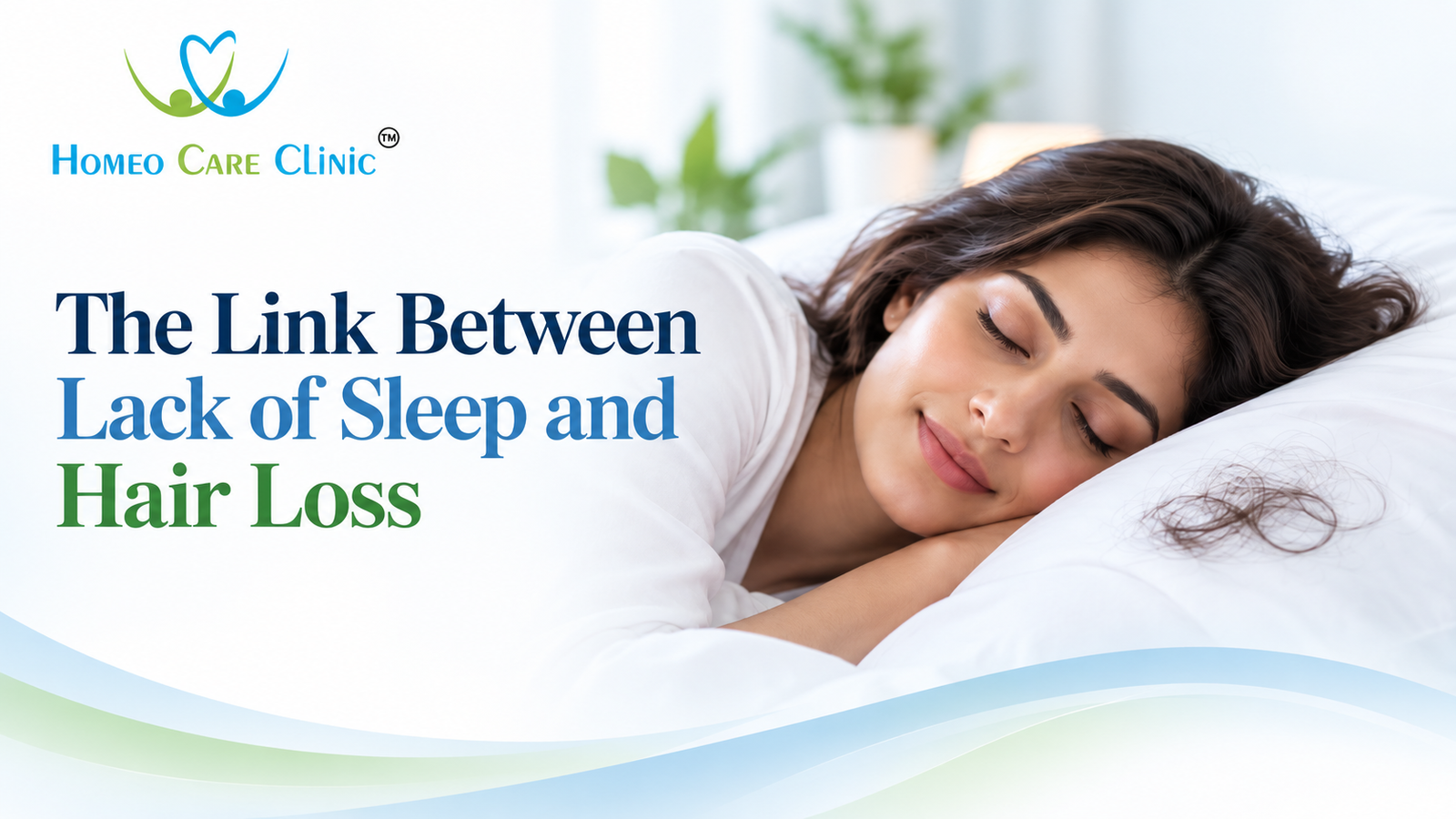
The Link Between Lack of Sleep and Hair Loss
We all know that sleep is important for our overall health—but did you know that your sleeping habits may also influence your hair health?
If you regularly stay up late, wake up feeling tired, or struggle to get enough quality sleep, you may eventually notice changes in your hair. Increased shedding, thinning, or slower-looking growth can sometimes appear during periods of prolonged stress and poor sleep.
But does lack of sleep actually cause hair loss?
The answer is more complicated than a simple yes or no. Research suggests that sleep problems can interact with stress, hormonal regulation, inflammation and the body’s natural biological rhythms—all of which may influence the hair growth cycle. However, poor sleep is not considered the only or direct cause of every type of hair loss.
Let’s understand the connection and what you can do to support healthier hair.
Does Lack of Sleep Cause Hair Loss?
Lack of sleep does not automatically mean that you will lose your hair. Hair loss can have many possible causes, including genetics, hormonal changes, nutritional deficiencies, certain medical conditions, medications and significant physical or emotional stress.
However, consistently poor sleep may contribute to conditions that affect healthy hair growth.
When you don’t sleep well, your body can experience increased stress and disruption to normal biological processes. Chronic stress is associated with hair shedding, particularly telogen effluvium, a temporary form of excessive shedding in which more hair follicles enter the resting phase of the hair cycle.
This means that if you are experiencing both prolonged sleep problems and increased hair shedding, your sleep habits may be one factor worth discussing with a qualified hair specialist or dermatologist.
How Are Sleep and Hair Growth Connected?
Your hair follicles are living structures that depend on your body’s normal biological processes to maintain the hair growth cycle.
Several mechanisms may help explain the relationship between sleep and hair health:
1. Sleep and Stress
Poor sleep can make it harder for the body to manage stress effectively. Ongoing psychological stress, in turn, can affect the hair growth cycle.
Significant stress may push more hair follicles into the resting phase. The result can be increased shedding several weeks or months after the triggering stressor.
This is one reason why someone may notice increased hair fall after a prolonged period of stress rather than immediately.
2. Sleep and Hormonal Regulation
Sleep is closely connected with the body’s hormonal and circadian systems.
Disrupted sleep patterns may affect normal hormonal signalling and biological rhythms. Researchers are investigating how these changes may interact with different types of hair loss, although the exact relationship is still being studied.
So, rather than thinking of sleep as a single “hair growth switch,” it is better to view good sleep as one part of maintaining overall conditions that support healthy hair.
3. Sleep, Inflammation and the Immune System
Poor sleep has also been associated with changes in immune and inflammatory pathways.
This may be particularly relevant for some hair-loss conditions. Recent research suggests that sleep disturbances and hair-loss disorders can influence each other, although more research is needed to establish exactly how these mechanisms work.
4. Sleep and the Hair Growth Cycle
Every hair follicle naturally moves through different phases of growth, transition and rest.
When the body experiences significant stress, a greater number of follicles may shift into the resting phase. This can result in noticeable shedding later—a pattern commonly associated with telogen effluvium.
What Does Stress-Related Hair Shedding Look Like?
Not all hair loss looks the same.
If increased shedding is associated with a recent period of significant stress or poor sleep, you may notice:
- More hair than usual on your pillow or in the shower
- Increased hair on your brush or comb
- Overall thinning rather than a single bald patch
- A visibly wider hair part
- A thinner-looking ponytail
- Hair shedding that appears weeks or months after a stressful period
The American Academy of Dermatology notes that normal daily shedding is common, while excessive shedding can occur after significant physical or emotional stress.
However, these symptoms can also occur with other types of hair loss. That’s why identifying the underlying cause is important.
Can Better Sleep Help Reduce Hair Fall?
Improving your sleep cannot guarantee that hair loss will stop, especially if your hair fall is caused by genetics, hormones, nutritional deficiencies or another medical condition.
But establishing healthy sleep habits can support your overall wellbeing and may help reduce one potential contributor—poor stress management.
Try these simple habits:
Maintain a Consistent Sleep Schedule
Try to go to bed and wake up around the same time each day. A consistent routine can help support your body’s natural circadian rhythm.
Reduce Screen Time Before Bed
Give yourself some screen-free time before going to sleep. Instead of scrolling through your phone, consider reading, listening to calming music or practising relaxation techniques.
Create a Comfortable Sleep Environment
Keep your bedroom comfortable, quiet and relaxing. A consistent bedtime routine can make it easier to wind down.
Manage Daily Stress
Stress management is important for both general wellbeing and hair health. Gentle exercise, breathing exercises, meditation or simply taking time away from work can help you manage everyday stress.
Don’t Ignore Persistent Hair Loss
If your hair continues to thin or shed despite improving your sleep, don’t assume that sleep is the only cause.
Hair loss can have multiple underlying causes, and an appropriate evaluation can help determine what is actually happening.
How Long Does Stress-Related Hair Loss Last?
The timing of hair shedding can sometimes make it confusing.
With telogen effluvium, excessive shedding may become noticeable a few months after the triggering stressor rather than immediately. In many cases, the condition is temporary and hair growth can recover once the underlying trigger is addressed.
However, recovery varies from person to person.
If shedding continues, becomes severe, or is accompanied by patchy hair loss, scalp symptoms or noticeable thinning, professional evaluation is recommended.
When Should You See a Hair Specialist?
Consider getting your hair loss assessed if you notice:
- Sudden or significant hair shedding
- Rapid thinning of the scalp
- A widening hairline or part
- Patchy areas of hair loss
- Persistent shedding for several months
- Hair loss accompanied by scalp irritation or other symptoms
- Hair loss that continues despite improving sleep and lifestyle habits
A hair specialist or dermatologist can help distinguish between stress-related shedding and other causes of hair loss.
This is important because different types of hair loss require different approaches.
Can Hair PRP Treatment Help With Hair Loss?
If you are considering PRP hair treatment, it’s important to first understand why you are experiencing hair loss.
Platelet-rich plasma (PRP) treatment involves using a concentrated portion of your own blood platelets and injecting it into areas of the scalp as part of a hair restoration treatment plan.
PRP may be considered for certain types of hair thinning, but it is not a universal treatment for every cause of hair loss. Your suitability should be assessed by a qualified medical professional based on your hair-loss pattern, scalp condition and underlying cause.
At Hair PRP Treatment, our approach focuses on understanding your hair concerns before recommending a treatment plan.
The Bottom Line: Sleep Matters for Your Hair, Too
Your hair health is connected to your overall health.
While lack of sleep does not automatically cause hair loss, persistent sleep problems may interact with stress, hormonal regulation, inflammation and other biological processes that can influence hair shedding. Current research also suggests that the relationship between sleep and hair loss may work in both directions—hair loss can cause emotional stress and sleep problems, while poor sleep may contribute to factors associated with some hair-loss conditions.
So, getting better sleep is a worthwhile step—but it shouldn’t replace proper evaluation when hair loss is persistent or significant.
If you’re concerned about thinning hair or excessive shedding, identifying the underlying cause is the first step toward choosing the right treatment.
Healthy hair starts with understanding what your hair actually needs.
Frequently Asked Questions
1. Can lack of sleep cause hair loss?
Poor sleep is not considered a direct cause of every type of hair loss. However, prolonged sleep problems may be associated with stress and biological changes that can contribute to hair shedding in some people.
2. How many hours should I sleep for healthy hair?
There is no specific number of hours proven to directly prevent hair loss. Instead, focus on getting consistent, good-quality sleep appropriate for your age and individual needs.
3. Can sleeping late cause hair fall?
Occasionally sleeping late is unlikely to cause significant hair loss by itself. However, consistently disrupted sleep patterns may contribute to stress and other factors associated with hair health.
4. Does stress cause hair loss?
Yes, significant physical or emotional stress can trigger excessive shedding known as telogen effluvium. The shedding may become noticeable several months after the stressful event.
5. Can hair grow back after stress-related hair loss?
Stress-related shedding such as telogen effluvium is often temporary, and hair can recover after the underlying trigger is addressed. However, persistent or unexplained hair loss should be evaluated by a qualified professional.
6. Is PRP suitable for everyone with hair loss?
No. PRP is not appropriate for every type or cause of hair loss. A professional assessment is important before deciding whether PRP is suitable for you.
7. When should I seek professional help for hair loss?
If you experience sudden, patchy, rapidly progressing or persistent hair loss, it is better to seek professional evaluation rather than assuming that poor sleep is the only cause.
Disclaimer: This article is intended for general educational purposes and should not replace personalised medical advice, diagnosis or treatment from a qualified healthcare professional.